
Iraqi Musical Instruments: Oud, Santur, Joza & More
Iraqi music is not defined by one instrument, but by the way melody, maqam, poetry and rhythm work together. The oud, santur, joza, qanun, nay, riq and darbuka all appear in Iraqi musical life, yet their roles change between the urban Iraqi maqam tradition, rural repertories, religious settings, popular song and modern ensembles.
This guide distinguishes instruments strongly associated with Iraq from instruments shared across the wider Arab, Ottoman and Persianate musical worlds. That distinction matters: the oud or nay is not exclusively Iraqi, while the Iraqi santur and the spike fiddle called joza have especially important places in Baghdad’s maqam ensemble.
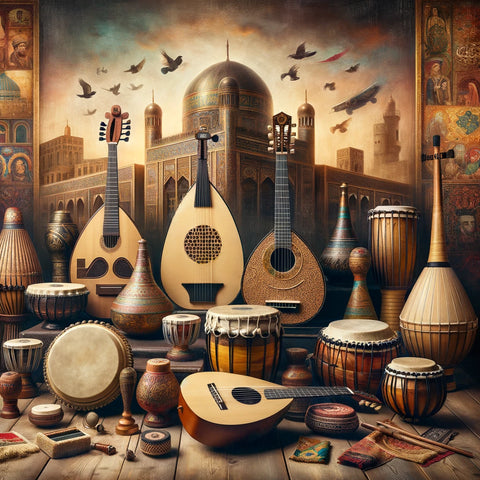
What makes Iraqi instrumental music distinctive?
Iraqi instrumental music is shaped by melodic modes, flexible intonation, ornamented phrasing and close interaction with the voice. In Iraqi maqam performance, instruments support the singer, mark structural transitions and respond to poetic delivery rather than simply accompanying a fixed tune.
Iraq includes Arab, Kurdish, Turkmen, Assyrian, Armenian, Yazidi, Mandaean and other communities, each with its own repertories and instruments. “Iraqi instruments” therefore describes a musical landscape, not a single uniform national ensemble.
The Iraqi maqam ensemble: the chalghi baghdadi
The traditional Baghdad ensemble known as chalghi baghdadi is central to Iraqi maqam. Its core is commonly described as santur, joza, tabla or dumbak, and riq, with the maqam singer at the center. Ensemble composition has varied across periods and performers.
The chalghi does not function like a Western orchestra with fixed written parts. Players know the maqam pathway, rhythmic cycles and conventional responses. They follow the vocalist closely, provide short instrumental passages and shape the movement from free or flexible sections into measured song forms.
Oud: Iraq’s influential fretless lute
The oud is a fretless, short-necked lute with a deep bowl and a flat soundboard. It is played with a risha and can articulate both the fine pitch shades of maqam and rapid, rhythmically precise passages.
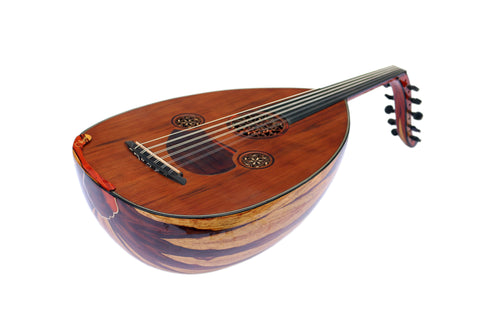
Iraq holds an exceptional place in modern oud history. The Baghdad school is associated with figures such as Şerif Muhiddin Targan, Jamil Bashir, Munir Bashir and Salman Shukur, whose teaching and performance helped define twentieth-century solo technique. Iraqi makers and musicians also developed ouds with distinctive construction choices, including floating-bridge designs used by many contemporary players.
What does an Iraqi oud sound like?
No single tone represents every Iraqi oud. Scale length, bracing, soundboard, bridge, strings and technique all matter. In broad terms, many floating-bridge Iraqi-style instruments are valued for clarity, projection and quick response, while fixed-bridge Arabic ouds may offer a rounder attack. Individual instruments vary substantially.
Santur: the struck zither of Iraqi maqam
The Iraqi santur is a trapezoidal zither whose metal strings are struck with two light beaters. It provides a bright, ringing field of sound and can outline maqam phrases, answer the singer and articulate measured passages within the chalghi ensemble.
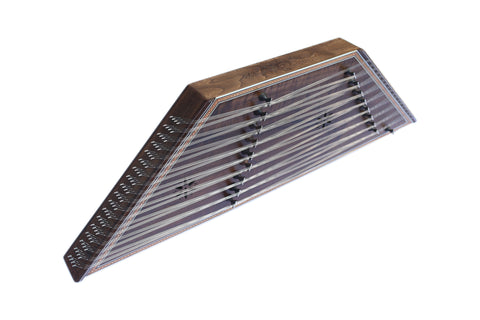
Do not assume that every santur is interchangeable. Iraqi, Iranian and other santur traditions differ in dimensions, bridge layout, tuning logic, repertory and playing technique. A musician studying Iraqi maqam should seek an instrument and teacher suited to that tradition.
Joza: Baghdad’s coconut-shell spike fiddle
The joza, also written jowza or jawza, is one of the instruments most specifically associated with Iraqi maqam. Its name refers to the coconut shell traditionally used for the small resonator. A skin membrane covers the resonator, and the instrument is played vertically with a bow.
The joza’s focused, nasal and highly articulate voice can follow the singer’s ornaments and pitch inflections closely. It should not be treated as merely another name for the kamancheh: the instruments are related within a wider spike-fiddle family, but their construction, local repertory and performance practice differ.
Qanun: precision, range and modal detail
The qanun is a plucked trapezoidal zither with courses of strings and small levers, often called mandals, that help the player change pitch during performance. It offers wide range, fast passagework and carefully controlled modal inflection.
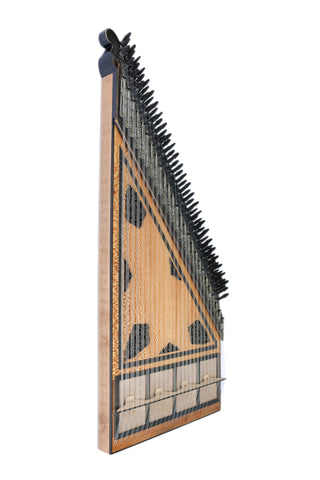
Although the qanun belongs to many Arab and Turkish traditions, Iraqi performers use it in art music, song accompaniment and contemporary ensembles. The exact lever system and tuning procedure depend on the instrument and school; players should not copy settings from an unrelated qanun without checking string length and intended pitch.
Nay: breath, pitch and phrasing
The nay is an end-blown reed flute used across the Middle East. It produces sound when the player directs a narrow air stream against the rim. Breath pressure, lip angle and head position control register, pitch shading and tone color.
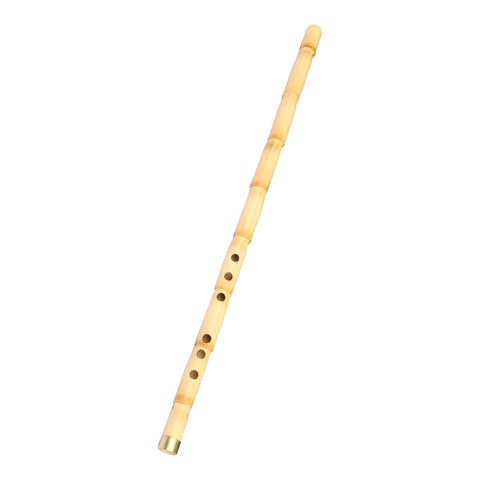
In Iraqi music the nay may appear in art-music ensembles, religious contexts and song accompaniment. Different lengths produce different fundamental pitches, so players often own a set rather than one universal flute. Turkish and Arabic naming and pitch conventions are not always identical.
Riq: a frame drum for detailed ensemble rhythm
The riq is a small frame drum fitted with pairs of metal jingles. A skilled player combines skin strokes, rim sounds, rolls and controlled jingle articulation to express an iqa‘, or rhythmic cycle, with considerable detail.
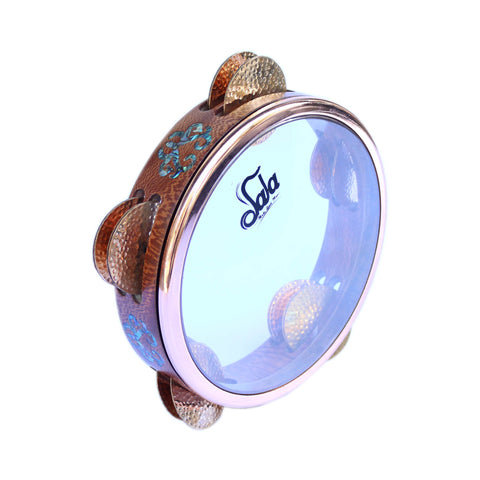
The riq is not simply a tambourine used for background noise. In classical and maqam-based settings, it can lead rhythmic interpretation, signal transitions and adjust density around the singer and melodic instruments.
Darbuka and tabla: the goblet-drum voice
The goblet drum is widely called darbuka, dumbak or tabla depending on place and context. In Iraq, tabla is a common term, but it should not be confused with the pair of tuned hand drums used in South Asian music.
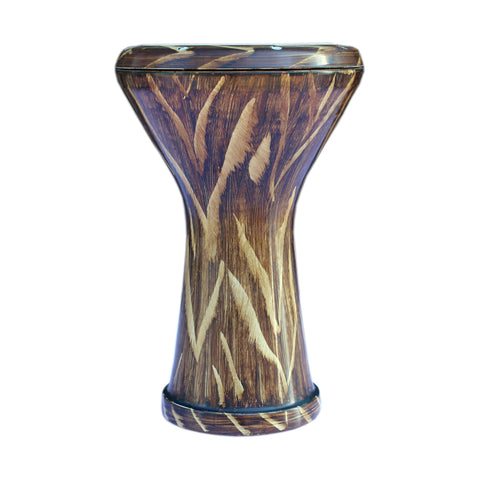
The central strokes are a low dum near the center and a higher tak near the edge, expanded with muted attacks, snaps and ornaments. Clay or metal bodies and natural or synthetic heads respond differently to weather, touch and amplification.
Other instruments heard in Iraq
Iraqi musical life extends well beyond a single Baghdad ensemble. Depending on region, community and genre, listeners may encounter the following:
- Khashaba: a wooden goblet drum closely connected with the musical culture of Basra and southern Iraq.
- Mṭabbag or mijwiz-type reed pipes: double-pipe instruments used in folk and dance settings.
- Rababa: regional bowed-lute forms associated with Bedouin and narrative song traditions.
- Tanbur and saz-family lutes: found particularly in Kurdish, Turkmen and religious repertories, with distinct local forms.
- Daf and other frame drums: important in Kurdish music, devotional practice and celebrations.
- Modern violin, cello and double bass: integrated into twentieth-century Iraqi radio, theater, art-music and song ensembles.
How Iraqi maqam changes the role of an instrument
A maqam is more than a scale. It includes characteristic melodic pathways, important tones, cadential behavior, customary phrases and relationships with poetry and rhythm. An instrument must therefore do more than play the correct set of notes.
Experienced players listen for the singer’s breath, text and ornaments. They may sustain a tonal center, echo a phrase, introduce a measured section or leave space. This responsive practice is one reason notation alone cannot teach Iraqi maqam style.
How to choose an instrument for Iraqi music
Choose the musical tradition first, then the instrument. A general Arabic oud may work for many Iraqi repertories, but an Iraqi santur or joza requires more specialized sourcing, setup and instruction.
| Goal | Practical starting point | Check before buying |
|---|---|---|
| Learn Iraqi oud | Arabic or Iraqi-style oud with suitable string set | Scale length, bridge type, action, intended tuning and teacher’s advice |
| Study Iraqi maqam ensemble | Santur or joza only with access to specialist teaching | Tradition-specific construction, tuning, replacement materials and repair support |
| Learn rhythm | Riq or well-balanced tabla/darbuka | Head response, weight, rim comfort and local rhythmic vocabulary |
| Explore melodic wind playing | Arabic nay matched to a teacher’s pitch system | Length, fundamental pitch, hole placement and reed condition |
Buying from a specialist matters because labels are often broad. Ask for a clear recording of the actual instrument, its dimensions, materials, tuning, included accessories and return conditions. For uncommon instruments, confirm that replacement strings, membranes or bows are available.
Explore ouds, santurs, riqs and darbukas at Sala Muzik, or read our guide to Arabic music for broader context.
Care and maintenance
Wood, skin, reed and metal react differently to climate. Keep wooden instruments away from hot cars, heaters and rapid humidity changes. Wipe strings after playing, release bow tension, and let natural-skin drums dry gradually after exposure to moisture.
Do not move a santur bridge, reshape a joza bridge, oil an oud peg or enlarge a nay hole without specialist guidance. Small changes can alter tuning, action or structural balance. Use a fitted case and seek a repairer familiar with the specific instrument.
Frequently asked questions
What is the most distinctively Iraqi ensemble?
The chalghi baghdadi associated with Iraqi maqam is especially distinctive. Its core commonly includes santur, joza, riq and tabla or dumbak accompanying a maqam singer.
Is the oud originally only an Iraqi instrument?
No. The oud belongs to a wide region and many traditions. Iraq is nevertheless crucial to modern oud making, teaching and solo performance, particularly through the Baghdad school.
What is the difference between joza and kamancheh?
Both belong to the spike-fiddle world, but the Iraqi joza traditionally uses a small coconut-shell resonator and has its own setup and maqam repertory. They should not be treated as interchangeable names.
Is Iraqi santur the same as Persian santur?
They are related struck zithers, but construction, bridge arrangement, tuning and repertory can differ. Students should use an instrument appropriate to the tradition they plan to learn.
Which Iraqi instrument is easiest for a beginner?
Accessibility depends on teachers and musical goals. A darbuka offers an immediate first sound, while good rhythm takes long study. Oud and nay are widely available but technically demanding; joza and Iraqi santur require specialist instruction.
Can these instruments play Western equal temperament?
Some can approximate or perform equal-tempered music, but Iraqi maqam uses pitch shades and melodic behavior that are not captured by a twelve-note keyboard alone. Instrument setup and trained listening remain important.


Leave a comment